

Data science career paths are growing faster than ever, and the demand for skilled professionals in this field who can turn raw data into meaningful insights continues to rise. Whether you’re a student, job seeker, or someone planning a career switch, understanding the various data science career paths is the first step toward building a high-paying and future-proof career.
In this guide, you’ll learn about the best roles in data science, essential skills, how to choose the right path, and a practical roadmap to get started—all explained in a simple, conversational, and beginner-friendly way.
Why Data Science Is a Smart Career Choice
Data has become the backbone of modern business. Every industry—from healthcare to finance—relies on data-driven decisions. This shift has created massive opportunities across multiple data science career paths, offering high salaries, remote work options, and strong global demand.
Here’s why choosing a career in data science makes complete sense:
- High-paying and remote-friendly work
- Demand across all industries
- Opportunities in AI, machine learning, and automation
- Flexible career tracks based on your strengths
- Unlimited long-term growth potential
If you want a future-proof career, data science is one of the safest and smartest moves you can make.
Top Data Science Career Paths to Explore in 2025
There are many exciting data science career paths, and each comes with its own responsibilities, skill set, and salary potential. Below are the top roles you should consider:
1. Data Analyst
A perfect starting point for beginners, the Data Analyst converts raw data into reports, dashboards, and insights that help businesses make better decisions.
Key Skills:
SQL, Excel, Tableau, Power BI, data visualization
2. Data Scientist
A more advanced role, the Data Scientist builds predictive models, works with big data, and solves complex analytical problems.
Key Skills:
Python, R, statistics, machine learning algorithms, data modeling
3. Machine Learning Engineer
ML Engineers focus on building and deploying large-scale machine learning systems used in automation, apps, and AI products.
Key Skills:
TensorFlow, PyTorch, Python, cloud platforms (AWS, GCP, Azure)
4. Data Engineer
A crucial role in the data ecosystem, the Data Engineer builds data pipelines, warehouses, and systems that support analytics and machine learning.
Key Skills:
SQL, Python, Spark, Hadoop, cloud architecture
5. Business Intelligence (BI) Analyst
BI Analysts convert data into business insights through visual reports that help companies improve strategy and performance.
Key Skills:
Tableau, Power BI, SQL, business analysis
How to Choose the Right Data Science Career Path for Your Growth
Choosing from multiple data science career paths can feel overwhelming, but the best way is to identify your strengths and goals.
1. Identify Your Interests
- Love coding? → Machine Learning Engineer or Data Engineer
- Love business and strategy? → BI Analyst
- Love working with models and insights? → Data Scientist
2. Check Your Background
- Developers often prefer Data Engineer or ML Engineer
- Non-tech beginners usually start as Data Analysts
3. Analyze Market Demand
Search local job portals to see which roles are trending in your region or industry.
4. Think Long-Term
Different roles lead to different senior positions—choose the path that aligns with your long-term growth.
Your earning potential also depends on the career path you choose. You can compare salaries here: Data Science Salary: Complete Role-Wise Comparison
Essential Skills Needed in All Data Science Roles
No matter which data science career path you choose, certain skills are essential:
- Python or R
- SQL
- Data cleaning and preprocessing
- Statistics and basic machine learning
- Data visualization
- Problem-solving and communication
These fundamentals form the foundation of every data science role.
Roadmap to Start Your Career in Data Science Career Paths
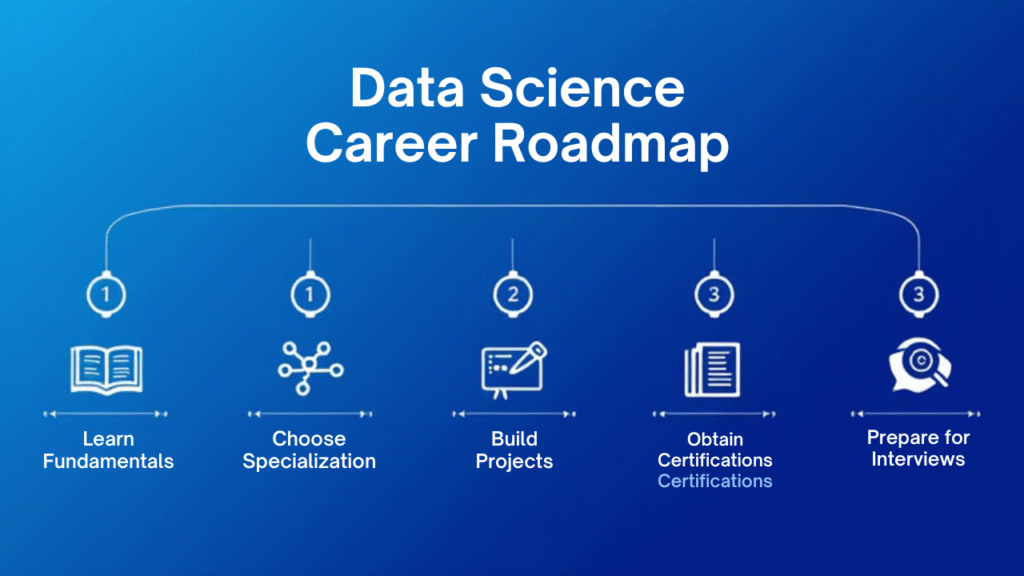
If you want to build a strong career, here’s a step-by-step roadmap to follow:
Step 1: Master the Fundamentals
Start with Python, SQL, statistics, and mathematical basics.
Step 2: Choose One Career Path
Don’t try to learn everything at once. Pick one role and learn deeply.
Step 3: Build Real-World Projects
Aim for 5–10 strong projects, such as dashboards, ML models, or data pipelines.
Step 4: Earn Certifications
Popular certifications include:
- Google Data Analytics
- IBM Data Science
- AWS or Azure Data Engineering
They add credibility to your resume.
Step 5: Create a Strong Resume & LinkedIn
Highlight your skills, certificates, GitHub projects, and achievements.
Step 6: Practice Interview Questions
Prepare for:
- SQL challenges
- Python coding tasks
- Case studies
- ML theory
- Problem-solving scenarios
Step 7: Apply Consistently
Apply to 10–20 roles daily and track your progress until you start receiving interview calls.
Future of Data Science Career Paths and Opportunities
As AI and automation evolve, even more advanced data science career paths are emerging. These include:
- AI Engineer
- MLOps Engineer
- Data Product Manager
- Deep Learning Researcher
With technology growing rapidly, data professionals will continue to be in high demand for decades.

Conclusion
The journey toward a rewarding career begins with understanding different data science career paths, developing strong foundational skills, and following a structured learning roadmap. Whether you’re drawn to analytics, engineering, or machine learning, this field offers endless possibilities, high salaries, and long-term job security.
With consistency, the right skillset, and practical experience, you can build a successful and future-proof career in data science.
For more information on data science certifications, check out IBM Data Science Professional Certificate
FAQs
1. Is data science a good career?
Yes, it offers high salaries, strong demand, and remote work opportunities.
2. Which data science career path is best for beginners?
Data Analyst and BI Analyst roles are ideal entry points.
3. Do I need coding?
Basic Python and SQL are required for most roles.
4. How long does it take to become job-ready?
Usually 6–12 months with the right plan.
5. Is data science hard?
It becomes easy with a clear roadmap, hands-on projects, and consistent learning.


Pingback: 5 Shocking Truths About Data Science Salary No One Tells You - Classic Tech Book
Pingback: Python Libraries for Data Science: What Experts Recommend in 2025 - Classic Tech Book